Between school, homework and activities, the days of a child with ADHD are already very full. Adding an hour of exercises is neither realistic nor desirable. Ten minutes a day, on the other hand, is manageable. It is short enough for them to accept, and regular enough for them to make progress. Here is a simple programme, to adapt according to your child’s age and interests.
In children with ADHD, attention runs out quickly, and a long session often turns into conflict. Ten minutes matches what they can manage without too much effort, especially at the end of the day. Knowing it will be short, they are more willing to get started. You finish before they have had enough. They keep a positive memory of the moment.
Regularity matters far more than duration. A short exercise every day leaves more of a mark than one long session a week. The training becomes a habit, almost a ritual. The child expects it and gets ready for it. An overview of the possible activities can be found on the page exercises for a child with ADHD.
On Monday, we work on attention with a spot-the-difference or find-it game, a maze, or a game where they must pick out a specific shape. Choose a level slightly below what they can already do, so the week starts with a success. They can time themselves if they like. Note their time in a small notebook. They can see their progress from one week to the next.
Tuesday is devoted to memory. We play Memory, Kim’s game, or ask them to repeat a sequence of numbers that gets longer and longer. You can also ask them to remember three instructions and carry them out in order. They love succeeding where they expected to fail. More ideas can be found on the page on working memory.
On Wednesday, we go outside or push the furniture aside for a controlled movement exercise. An obstacle course with instructions, a game of statues, or a race where they must stop at the whistle. The child burns off energy while learning to control it. They love this part of the week. A brother or sister can be invited to take part.
This type of exercise is valuable for very restless children. It shows them that they can move without going over the top. It helps them feel their body and slow it down. It prepares a calmer moment afterwards. Other activities of this kind are described on the page on exercises involving movement.
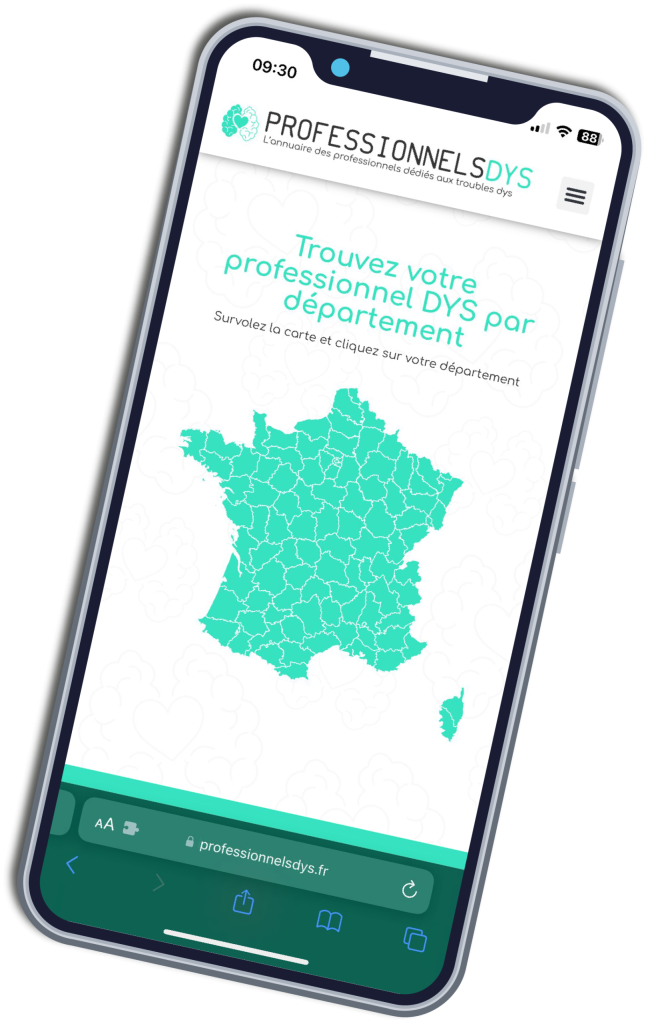
The only online directory dedicated to professionals working with Dys disorders
On Thursday, we work on planning on a small scale. The child prepares a simple recipe, a drawing in several stages, or a construction following a plan. Before starting, they say what they will do first, then next. We help them stick to their plan. They finish something they are proud of.
This session also builds perseverance, because they have to see it through to the end. If the project is too long for ten minutes, split it over two days. The important thing is that they see a plan helps them succeed. They will reuse it elsewhere. The method is explained in detail on the page on planning a task.
On Friday, we end the week with a calming exercise. Slow breathing, with one hand on the belly. Listening to the sounds in the room, eyes closed. Guided relaxation, lying on a mat. The child learns to slow down.
At first, ten minutes of calm may seem like an eternity. Start with three or four minutes, then add a drawing or a quiet colouring activity. Gradually, they manage for longer. They discover that they are capable of settling down. To vary the techniques, draw on the page on breathing.
At the weekend, you can take a break or suggest a board game as a family, which counts as training. Waiting one’s turn, following the rules, accepting defeat: it’s all there. The child does not experience it as an exercise. They share a genuine moment with their loved ones. You start again on Monday feeling rested.
The programme is not set in stone, quite the opposite. If an exercise doesn’t appeal, change it. If the child is tired one evening, skip a day without feeling guilty. Over a month, a few missed days make no difference. Games to play together are presented on the page board games and ADHD.
This programme does not replace professional follow-up, it complements it. A psychomotor therapist, a psychologist or a neuropsychologist can suggest more targeted exercises, suited to the child’s specific profile. They can also tell you what to focus on at home. You save time. You avoid working in the dark.
To find these specialists near you, the directory ProfessionnelsDys offers a search by town. Don’t hesitate to show your programme to the professional. They can adjust it. If you are not sure where to start, the page where to start provides some pointers.
A space for exchange, listening and support dedicated to parents of children with DYS disorders
About ten minutes is more than enough. Regularity matters far more than the length of the sessions.
We alternate: attention, memory, controlled movement, planning and calm, with a board game at the weekend.
Skip the day without feeling guilty. What counts is continuity over several weeks.
Advice, favourites and DYS news every week.
Subscribe here.
Dysorthographie.fr
The number one media on Dys disorders