In the queue, during a game, in class, at the table: waiting your turn is often an ordeal for a child with ADHD. They fidget, rush forward, go ahead of the others. This difficulty can earn them remarks and conflicts with other children. Here are exercises and games to help them be patient, little by little.
Waiting requires holding back the urge to act, tolerating inactivity and staying attentive to what is happening. For a child with ADHD, these three things are difficult. Their impulsivity pushes them to act straight away. Inactivity bores them deeply. They switch off.
This difficulty is not a whim. It is linked to how their brain works. We can help them learn patience, starting with very short waits. These grow over the weeks. Every successful wait is celebrated. Self-control is worked on in the page on curbing impulsivity.
Board games are the ideal opportunity to practise waiting your turn. We start with short games for two players, where the wait is brief. The child plays, then waits for the other to play. We clearly name the turns: it’s my go, it’s your go. They learn to be patient.
We gradually increase the number of players and the length of the game. The wait gets longer. We help them stay attentive during the others’ turns: what did your brother do? How many squares did he move forward? They stay in the game. They wait better. Suitable games are presented on the page board games and ADHD.
For conversations in the family or in a group, a talking object helps the child wait their turn to speak. A ball, a stick, a soft toy. The rule is simple: no object, no speaking. The others listen. Once they have finished, the object passes to another pair of hands.
The child can see concretely when it is their turn. They know they will be able to speak. They are more willing to be patient. They interrupt less. Family meals become calmer. Listening is worked on in the page on listening to the end.
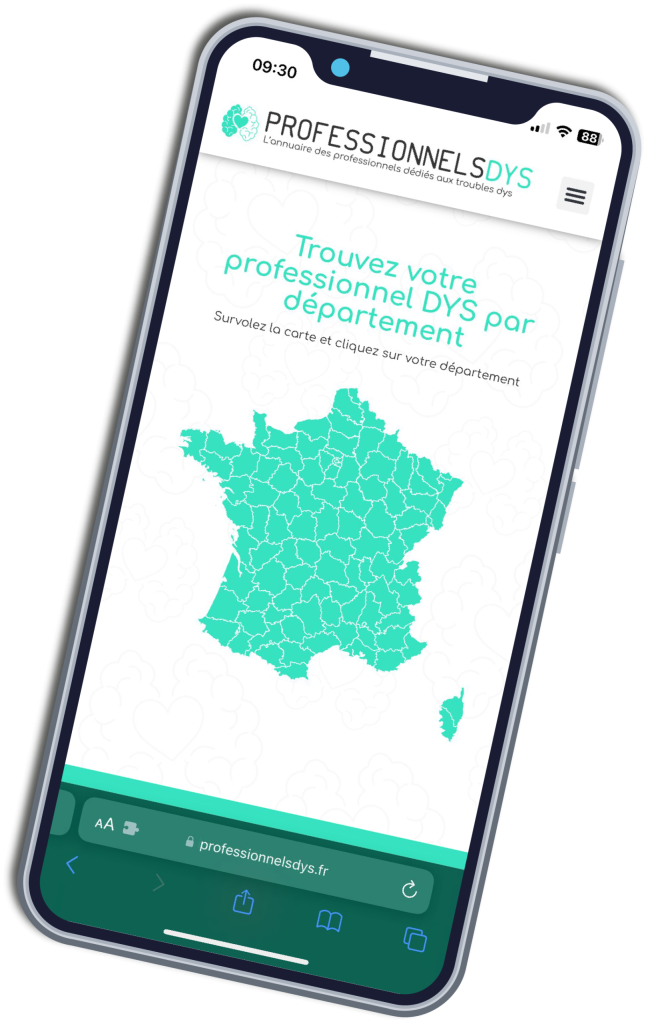
The only online directory dedicated to professionals working with Dys disorders
A wait whose length is unknown seems endless. We can make it visible with an hourglass or a timer. You will be able to play on the console when the hourglass has run out. The sand running down shows that the end is approaching. They are more patient.
One or two minutes is enough to start with. The duration increases when they manage it well. We praise them when they wait calmly. We note their progress. They learn that patience is rewarded. The tools for perceiving time are gathered on the page on managing your time.
Waiting with nothing to do is very hard for a child with ADHD. We can help them fill the wait. In a queue, we play at counting people, guessing their jobs, looking for objects of a certain colour. At the doctor’s, we bring a small book or a game. The wait passes more quickly.
We can also teach them little games they can do alone in their head, or with their fingers. Counting to fifty, reciting a nursery rhyme, making shapes with their hands. They keep busy. They don’t fidget. They wait without conflict. Games requiring no equipment are offered on the page on screen-free exercises.
Some games specifically train patience. The sweet game: we place a sweet in front of the child, and if they wait a few minutes without touching it, they will get two. The tower game, where cubes are stacked one by one while waiting for your turn. Games where they must stay still and silent. The child practises holding themselves back.
We adapt the length and difficulty to the child. We start easy. A compliment accompanies each success. They discover that they can wait. They are proud of it. Stopping games are developed on the page on the red light to stop.
Difficulties waiting their turn can complicate relationships with other children. A psychologist can help the child develop their social skills, for example in a social skills group. These groups allow practice with other children. Families often speak of them positively. They also build confidence.
To find a psychologist who offers this type of group, the directory ProfessionnelsDys allows a search by commune. This information does not always appear on the profiles, so a phone call is a way to check it. Some psychomotor therapists also run groups. Friendships are discussed on the page ADHD and friendships.
A space for exchange, listening and support dedicated to parents of children with DYS disorders
Because they must hold back the urge to act and tolerate inactivity, two things that are difficult for them.
With short games for two players at first, clearly naming the turns, then gradually lengthening them.
With an hourglass that shows the duration, and by filling the wait with small games.
Advice, favourites and DYS news every week.
Subscribe here.
Dysorthographie.fr
The number one media on Dys disorders