Letdah.fr a media powered by

the no.1 media on Dys disorders

TDA or ADHD: what’s the difference

TDA, TDAH, TDA/H: the terms get mixed up and it is no longer clear what we are talking about. In fact, it is the same disorder, which can show itself in different ways. Here is how to find your way. Understanding the terms helps you communicate better with professionals.

One single disorder

ADHD, attention deficit hyperactivity disorder, is a neurodevelopmental disorder. The term TDA is often used to refer to people who mainly have attention difficulties, without marked hyperactivity. The term ADHD is today the official term in France. The word TDA nevertheless remains common in family language.

Current classifications no longer distinguish two disorders, but several presentations of one and the same disorder.

You will find more details in the article C’est quoi le TDAH.

The three presentations

There are three presentations: the predominantly inattentive presentation, where inattention dominates; the predominantly hyperactive-impulsive presentation, where restlessness and impulsivity dominate; and the combined presentation, which combines both. Each presentation corresponds to a dominant symptom profile. It is specified by the doctor at the time of diagnosis.

Three articles complete this topic: TDAH inattentif, TDAH hyperactif-impulsif and TDAH mixte.

What TDA covers

When we talk about TDA, we generally mean the predominantly inattentive presentation: distractibility, forgetfulness, disorganisation, difficulty finishing tasks, without significant restlessness. These difficulties are often less visible, but they weigh heavily on schooling. They deserve just as much attention as restlessness.

To find out more, see C’est quoi le TDA.

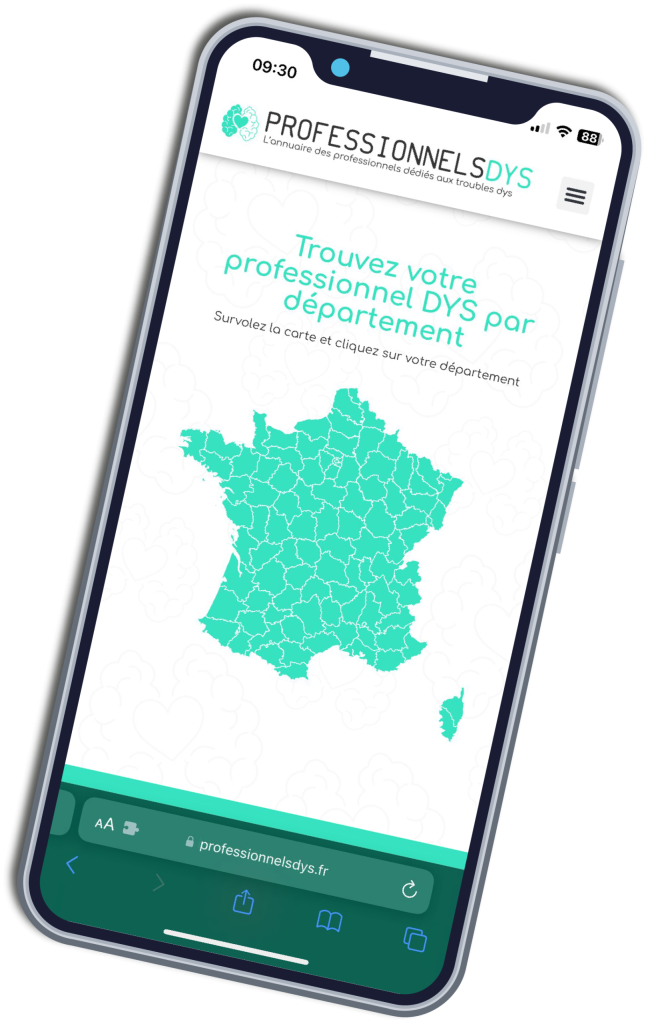
The only online directory dedicated to professionals working with Dys disorders

A presentation that can change

The presentation can change with age. Visible hyperactivity tends to decrease in adolescence, whereas inattention persists. A child diagnosed with combined ADHD may therefore mainly show inattention later on. It is therefore useful to review regularly with professionals. A child’s needs change over time.

The article Les signes du TDAH chez l’adolescent looks at this question in detail.

Why the distinction matters

The presentation influences how the disorder is identified and experienced. A restless child is quickly noticed, whereas an inattentive child can go unnoticed for years. Inattentive children are often identified later, sometimes only at secondary school or in adulthood.

It also guides certain choices of support.

This point is explained step by step in Les signes du TDA chez l’enfant.

Diagnosis

The doctor assesses symptoms of inattention, hyperactivity and impulsivity, their duration and their impact in several areas of life. They then specify the presentation. They also look for associated disorders, which are common in ADHD. This overall assessment guides support.

To go further, read our article Qui pose le diagnostic du TDAH.

Support

Whatever the presentation, support is based on the same broad principles: understanding, adapting, supporting and, sometimes, treating. Support is then adjusted to each child’s profile.

We detail this point in Traitement du TDAH chez l’enfant.

Chat with parents of children with dys disorders

A space for exchange, listening and support dedicated to parents of children with DYS disorders

Frequently asked questions

Are TDA and TDAH two different disorders ?

No, TDA generally refers to the predominantly inattentive presentation of ADHD. ADHD is the official term.

How many presentations are there ?

Three: predominantly inattentive, predominantly hyperactive-impulsive and combined. The presentation is specified at diagnosis.

Can the presentation change ?

Yes, hyperactivity tends to decrease with age. Inattention is often the most long-lasting.

Discover the articles published recently

Advice, favourites and DYS news every week.

Subscribe here.

Dysorthographie.fr

A media from the LesDys.fr group

The number one media on Dys disorders