ADHD does not always disappear in adulthood. Many adults continue to struggle with getting organised, managing their time, staying focused and finishing what they start. Some discover their ADHD later in life. Here are concrete exercises and strategies to help you live better with it day to day and at work.
In adulthood, visible hyperactivity often decreases, but restlessness may remain internal. Difficulties with attention, organisation and time management frequently persist. An adult with ADHD may procrastinate, forget appointments and struggle to complete their projects. They may also be impulsive in their decisions or their words. These difficulties weigh on both professional and personal life.
Some adults receive their diagnosis late, sometimes after their child’s. This diagnosis can be a relief: it explains difficulties experienced for as long as they can remember. It finally makes it possible to receive targeted support. Even at forty or fifty, it is possible to change your habits. The process is described on the page diagnosis in adulthood.
The ADHD brain holds on to short-term information poorly. An effective strategy is to write everything down, straight away, in one single place. A single notebook, or a note-taking app on your phone. Appointments, tasks, ideas. You do not rely on your memory.
Consult this tool every morning and every evening. Set reminders for important appointments. Use a shared calendar with those close to you if needed. You forget far less. You are less stressed. Dedicated exercises can be found on the page on working memory.
Procrastination is very common in adults with ADHD. Starting a task that is not very motivating is difficult. One tip is to break the task down into very small steps, so small that they seem easy. Instead of doing your tax return, you start by opening the file. Then you gather the papers.
You can also commit to working for just five minutes. Often, once you have started, you carry on. You can also work alongside someone, in person or by video, which helps you stay on task. Procrastination is covered on the page ADHD and procrastination.
The only online directory dedicated to professionals working with Dys disorders
Adults with ADHD often struggle to estimate how long a task will take and to notice time passing. You can use a visible timer for important tasks. Always allow more time than you think you need. Set alarms to know when to leave. Avoid scheduling too many things in one day.
A weekly planner, with important tasks and appointments, helps you keep an overview. Prepare it on Sunday. Glance at it each morning. Adjust as needed. Keep free moments for the unexpected. The basic tools are gathered on the page on managing your time.
At work, the environment matters a great deal. A tidy desk, noise-cancelling headphones, and notifications switched off during tasks that require concentration. Deal with one thing at a time. Take regular breaks. Move around a little between tasks.
If the adult has been granted recognition as a disabled worker, adjustments may be requested: a quiet workspace, adapted hours, reorganised tasks. These are discussed with the employer and the occupational health service. Each person decides whether or not they want to talk about it with their employer. Possible adjustments are presented on the page ADHD and workplace adjustments.
Adults with ADHD often feel their emotions intensely. They may become irritated quickly, lose heart, or feel overwhelmed. Emotional regulation techniques can help: slow breathing, pausing before responding, regular physical activity. Mindfulness is also used by some people. It helps create distance.
Sport is a valuable ally. It helps channel energy, reduce stress and improve sleep. Regular activity, even moderate, often makes a difference. Choose an activity you enjoy. Mindfulness is presented on the page on mindfulness.
An adult with ADHD can be supported by a psychiatrist for diagnosis and medical follow-up. A psychologist can offer cognitive behavioural therapy, which helps develop concrete strategies. A specialist coach can support day-to-day organisation. Support groups allow people to exchange with other adults. Everyone finds what suits them.
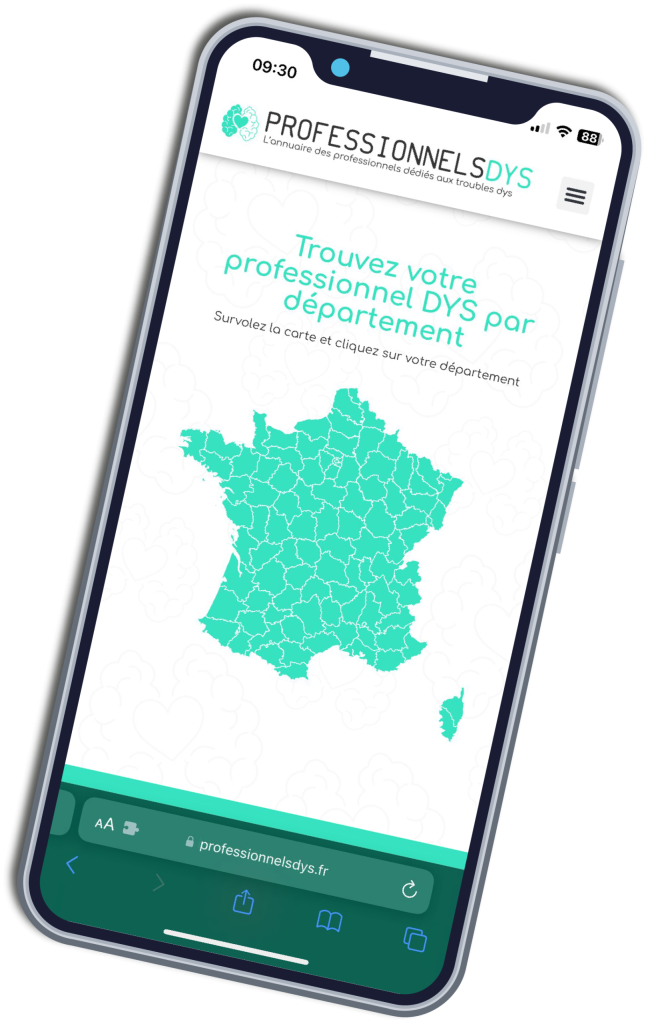
To find a psychologist or coach who works with adults with ADHD, the ProfessionnelsDys directory offers a search by town and by patients’ age. Not all of them see adults, so it is best to check. Some offer video consultations. Care is described on the page care for adults.
A space for exchange, listening and support dedicated to parents of children with DYS disorders
Not always. Visible hyperactivity often decreases, but difficulties with attention and organisation frequently persist.
By breaking the task down into very small steps and committing to work for just five minutes to get started.
A psychiatrist for diagnosis, a psychologist for behavioural therapy, and sometimes a coach for organisation.
Advice, favourites and DYS news every week.
Subscribe here.
Dysorthographie.fr
The number one media on Dys disorders